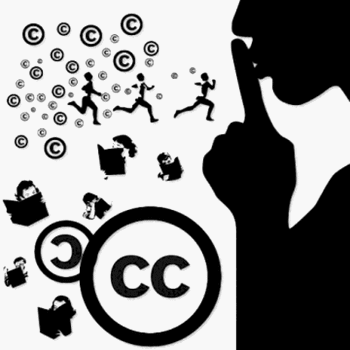
Most of the copyrighted works are owned by small number of conglomerates because they are the ones who have power to distribute those works. And as the Internet, which purpose was to share academic information among scholars, became a large part of our society, it invoked a problem of sharing creative works.
It is not a surprise that the current copyright benefits big companies rather than the real owners of creative works, the artists, because this was the original purpose of copyright in the past. In 1557, Queen Anne in England granted the stationer's guild a monopoly on printing and publishing books in order to control ideas in the society. This is considered as the first initiative for the modern copyright.
Copyright is especially detrimental in the cultural field because it restricts diversity. No ideas, arts, music and anything that form a certain culture are created by a sole mind of a creator. Every person's work is based upon the works of predecessors. In this sense, copyright, which discourage people from building on other people's work is an obstacle in developing cultural diversity.
However, this does not mean that we should abandon the whole copyright system. Rewarding and protecting the interests of artists must he guaranteed for their further creative works. The problem is to what extent should the rights be reserved? In order to solve this problem, many organizations invented their own copyright system which do not have adverse effect on artists' creative working condition. Creative Common is one of the pro- 'copyleft' organizations.
Creative Common is a non-profit organization which is devoted to expanding the range of creative works available for others to build upon legally and to share. They found that the problem of the current copyright system lies in the exclusive rights of works. With the current copyright system people cannot build upon other people's works or share it with others because copyright guarantees all rights of the work exclusively to the owner. However, the Creative Common solved this problem by dividing the rights which creators have cut up into several pieces. By using the Creative Common license, people can easily notice which rights are reseved and which are not. Since the license tells people what is allowed, they do not have to ask the owners, which people do so in the current copyright system when they want to use the works. This will encourage people to build upon other people's work and eventually contribute to our cultural diversity.
However, there still remain problems because creators themselves depend on conglomerates who is the main distributor in the culture industry. We have the key in solving this problem. It is hard for No one c( write your opinion) When there is no demand there will be no supply. Thanks to the Internet, it became much easier to publish our works without distributors. Now we can find much diversity through the online world. The Internet, which original purpose was to share ideas, is the most contributiong factor to our cultural diversity, and it is a flexible copyright system that makes this possible.

댓글 없음:
댓글 쓰기